tier 1 — platform
Premiercom
The distributor sells through one and the same store in two modes: to partner companies and to private buyers. The difficult part was the B2B side — every partner has their own contract prices, their own discount group, their own payment terms and an assigned manager, and all of that already lives in the company’s ERP. The store was not allowed to become a second source of truth. So the work was not about opening a store but about building the layer that ties the store to the ERP: the price a partner sees after signing in is their price from the ERP, and the order goes back into the ERP as a document, without retyping. Built as developers within the Rinnovation team.
storefront
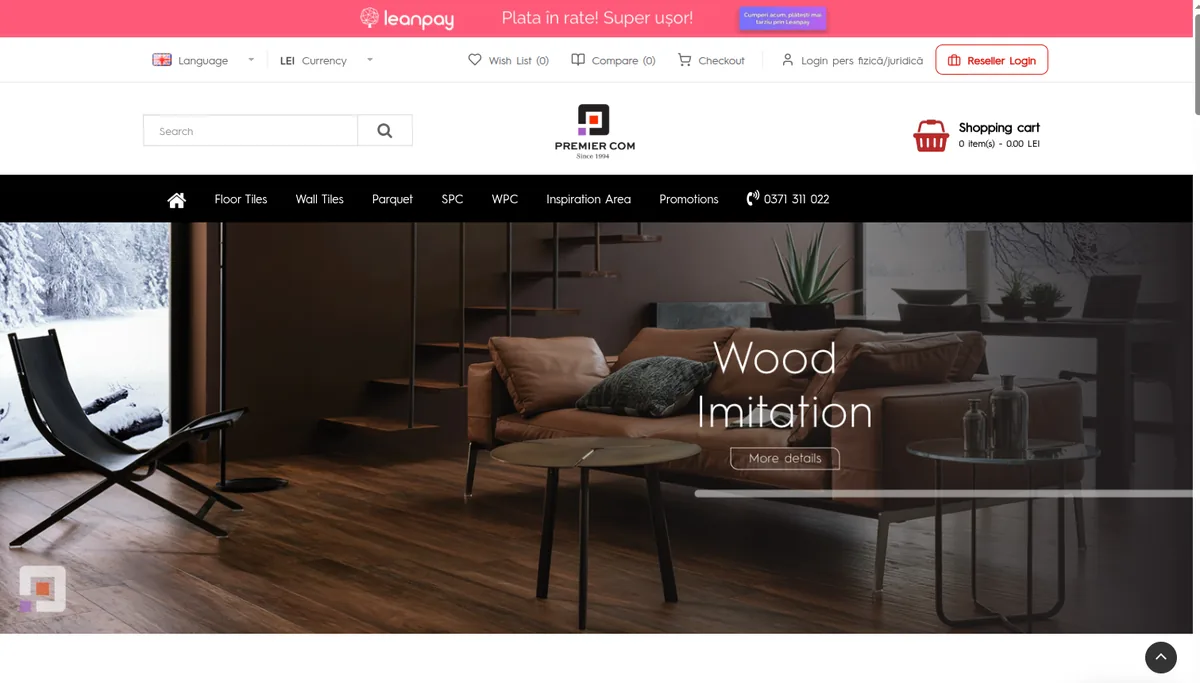
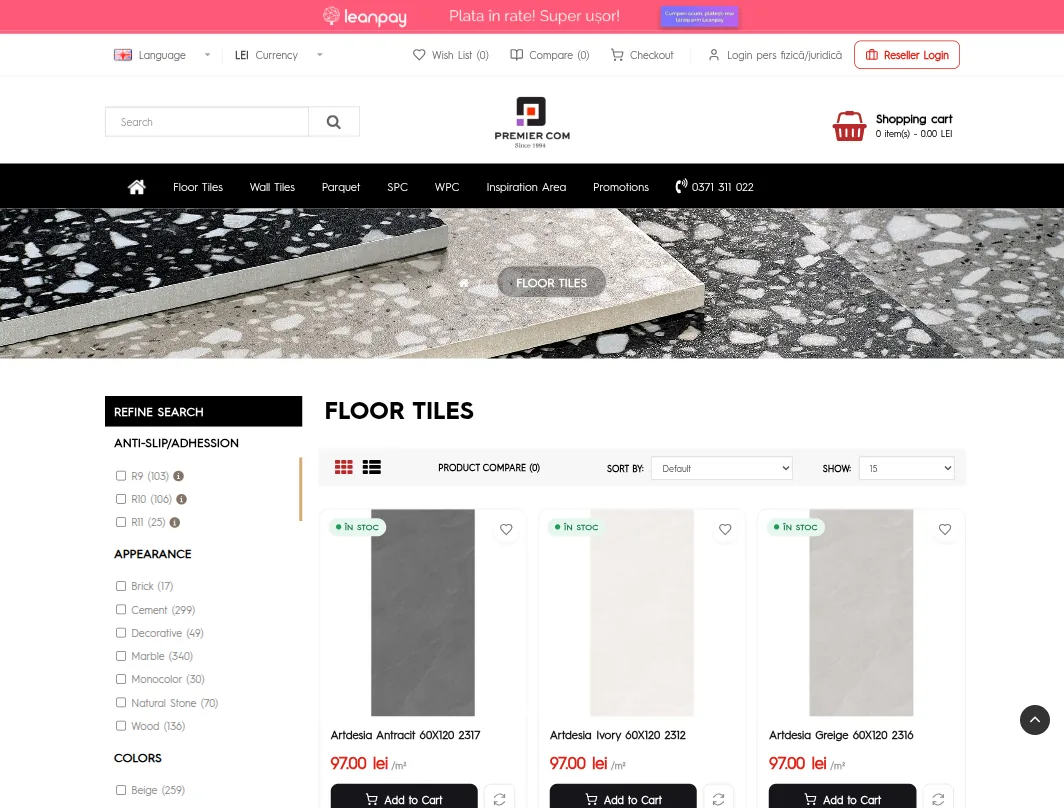
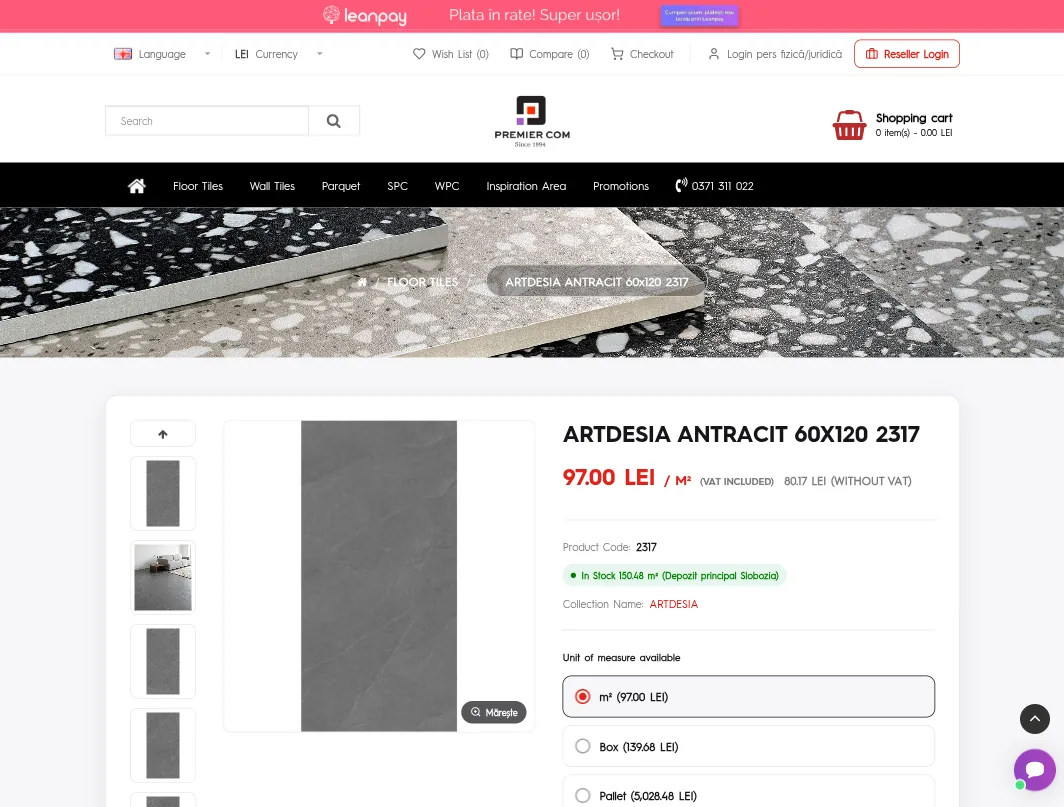
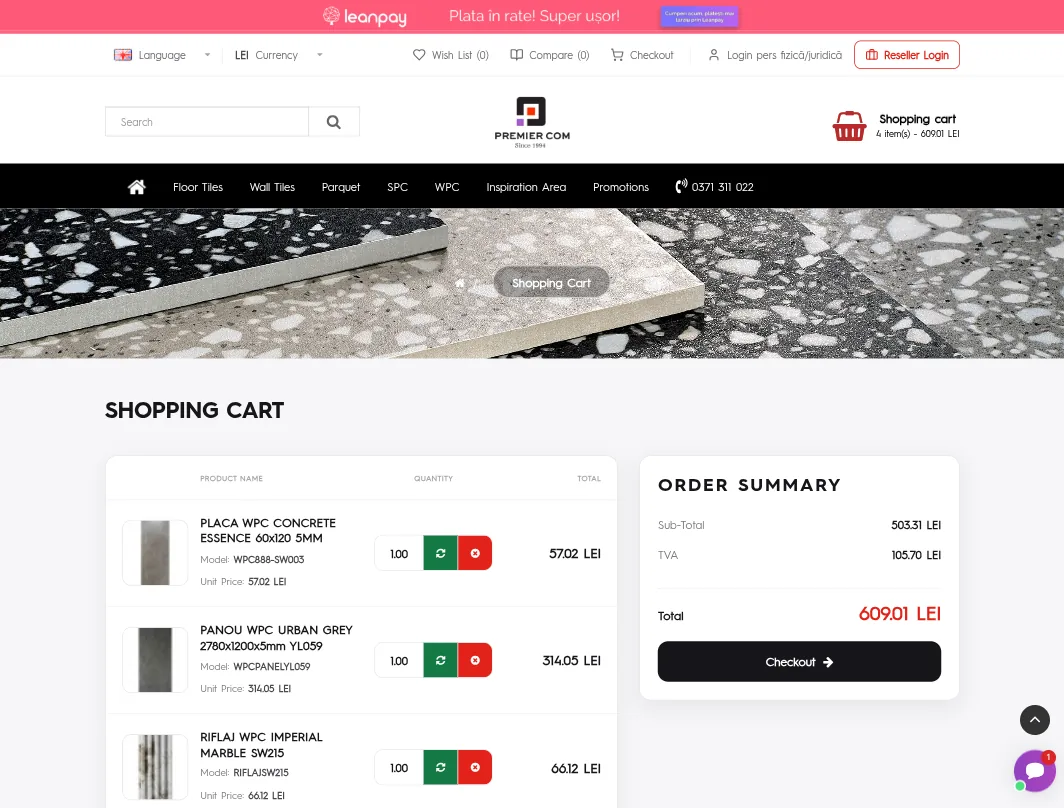
One store for two kinds of buyer: customer categories with different prices, a different order flow and different payment methods. Private customers get shelf prices, card payment and instalment purchase through financing partners, all in the same cart. A notification when an out-of-stock item is back.
synchronisation with the ERP
Partners arrive from the ERP, and store accounts are created and updated by themselves. The product directory is synchronised: categories, products, images and the mapping of ERP attributes onto store fields. Stock levels are updated so a partner orders against real availability rather than a static list. Discount groups, payment terms and managers are pulled through and tied to the partner. Synchronisations run on a schedule, with a log and separate diagnostic tools for when the mapping does not line up; there is data reconciliation and clean-up of records left without a pair.
contract prices
Three levels of price from the ERP: the general offer, what was agreed personally with the partner, and current promotions. After signing in, a company sees only its own prices, with the right priority between the general price, its own and a promotion. Offers are processed in batches — there are many partner-product combinations. Group discounts are applied in the store exactly as in the ERP.
the order, there and back
An order from the store is exported automatically into the ERP as a document — with the partner, products, prices and terms. The order status is read back from the ERP and shown in the account area, so the partner sees the real stage of delivery. The accompanying documents are available in the same place. The export respects the customer category: a retail order and a contract order enter the system under different terms.
B2B account area
Contract prices are visible only after signing in, and instead of immediate payment there are terms, ordering against an invoice, and an assigned manager. A company is verified automatically by its fiscal code against the public VAT registry.
tier 1 — platform
iTicket
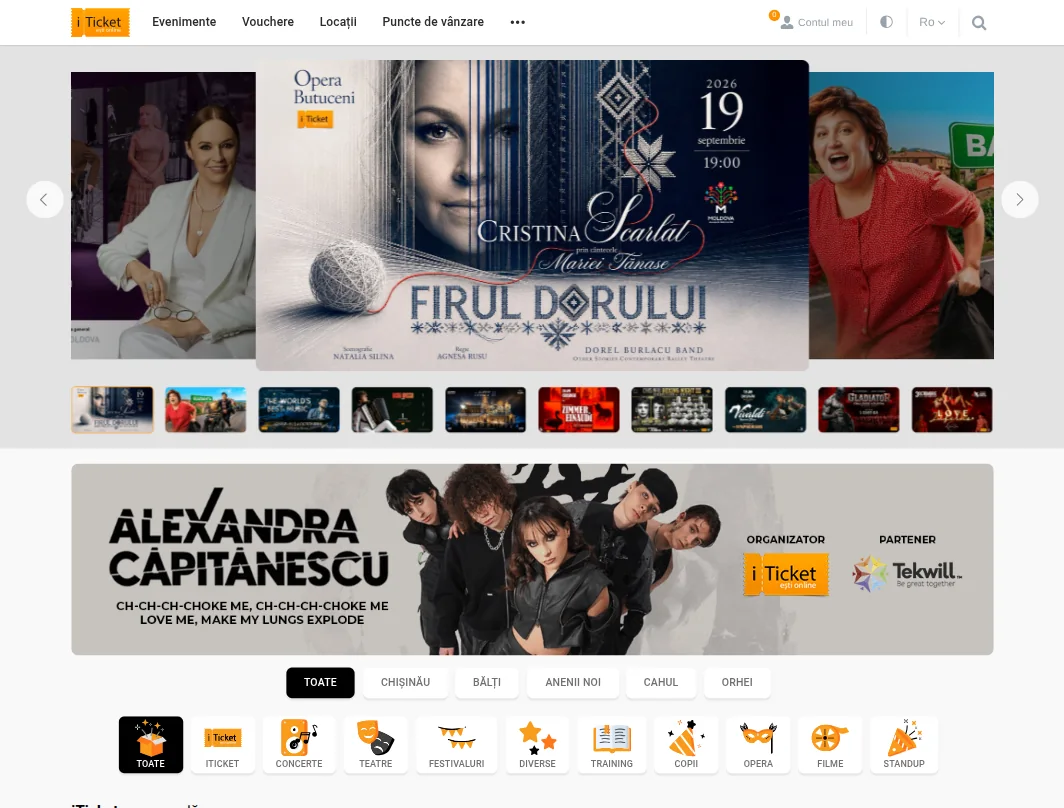
A platform for ticket sales and event management: from publishing an event and picking a seat on the hall plan to payment, ticket issue, entry control and settlement with the organiser. Six interfaces in one product, two markets with their own tax rules — Moldova and Romania — interface and content in Romanian, Russian and English. In active development and support for many years now.
iticket.md
iticket.ro
public site
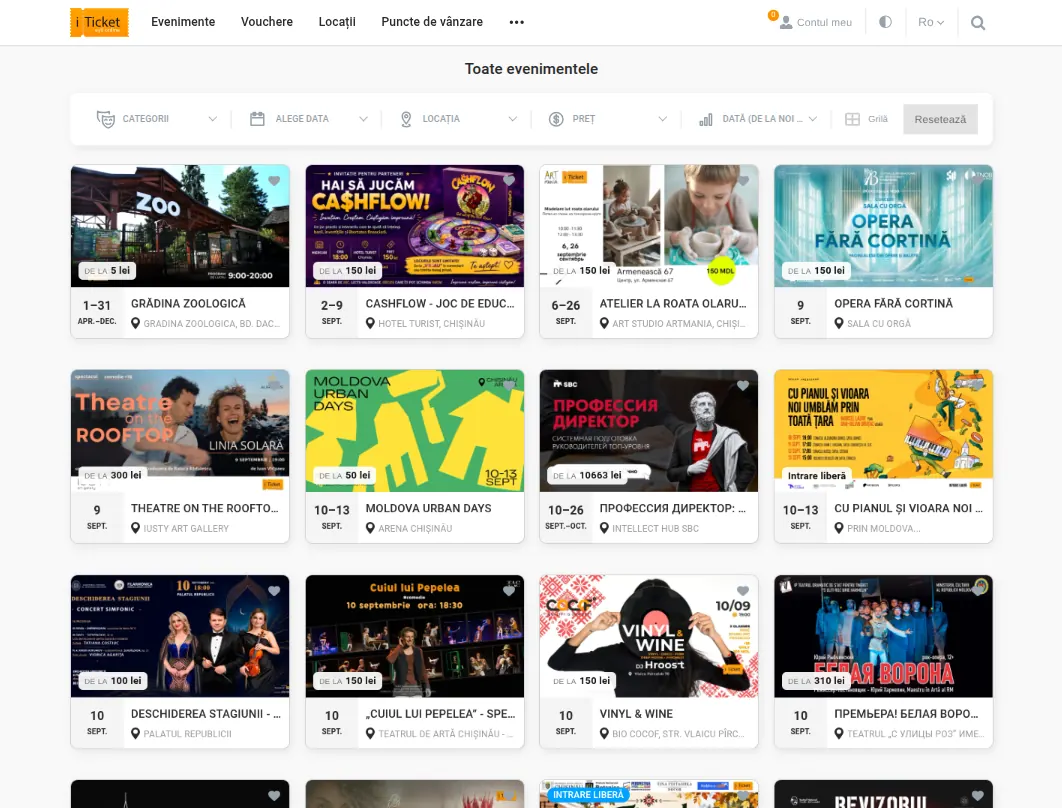
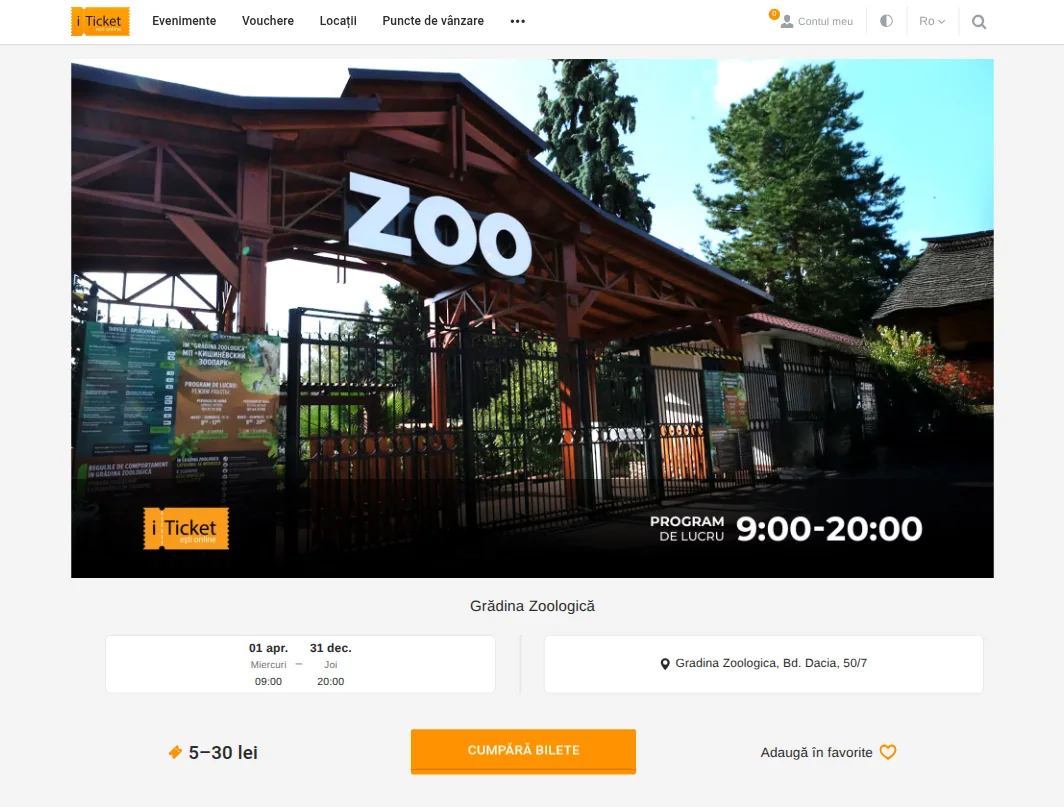
Event catalogue, search, hall plan with seat selection, checkout and a personal account. Different prices by sector, row and individual seat; a temporary hold prevents one seat being sold twice and releases itself if payment does not go through. Three languages each with their own URLs, structured data and sharing images, cookie consent.
organiser portal
Creating and running events, your own team, sales reports. Several companies and contracts per organiser, commission tiers and carried-over advances, commission split across separate accounts, electronic invoices into the fiscal system, configurable rules for cancellations and partial refunds.
admin panel
Internal operations, financial statistics, accounting reports with export to Excel and PDF. Role-based access rights and a full change log, GDPR flows for deleting and transferring personal data. Interface texts are edited by the client’s team, without developers.
box office
A physical point of sale: issuing and printing a ticket on the spot from templates configurable per event.
gift voucher shop
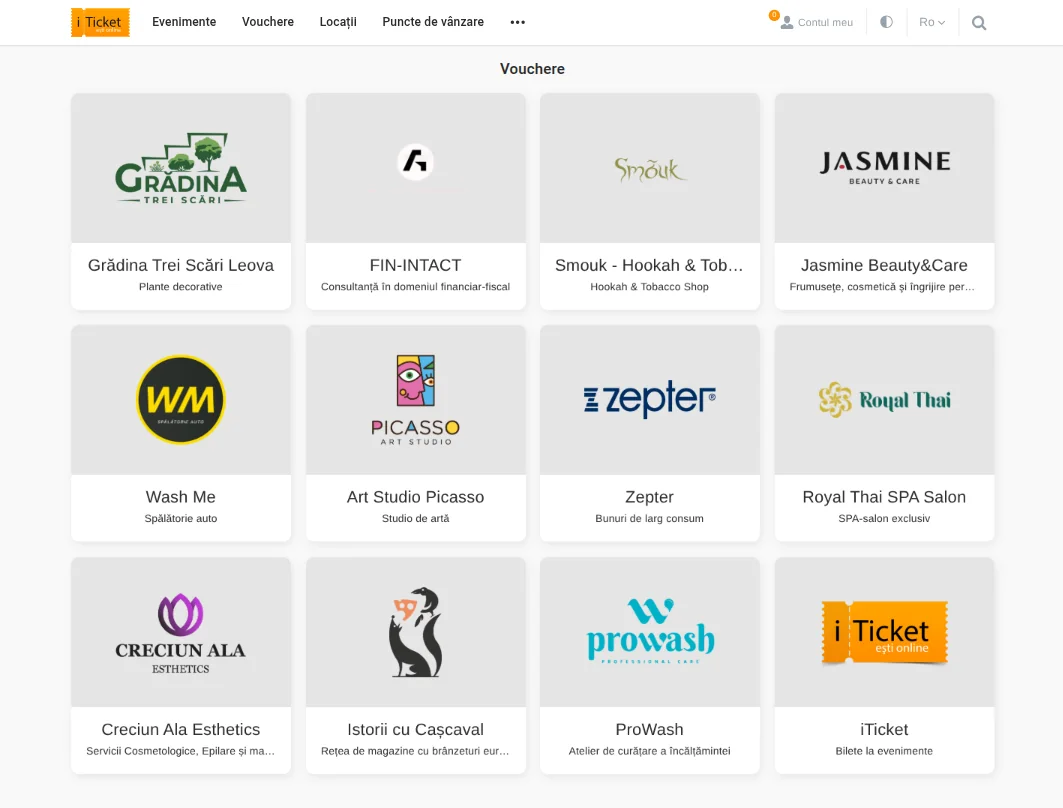
Buying a voucher, sending it to a recipient, redeeming it against a ticket order, and scanning.
buyer app
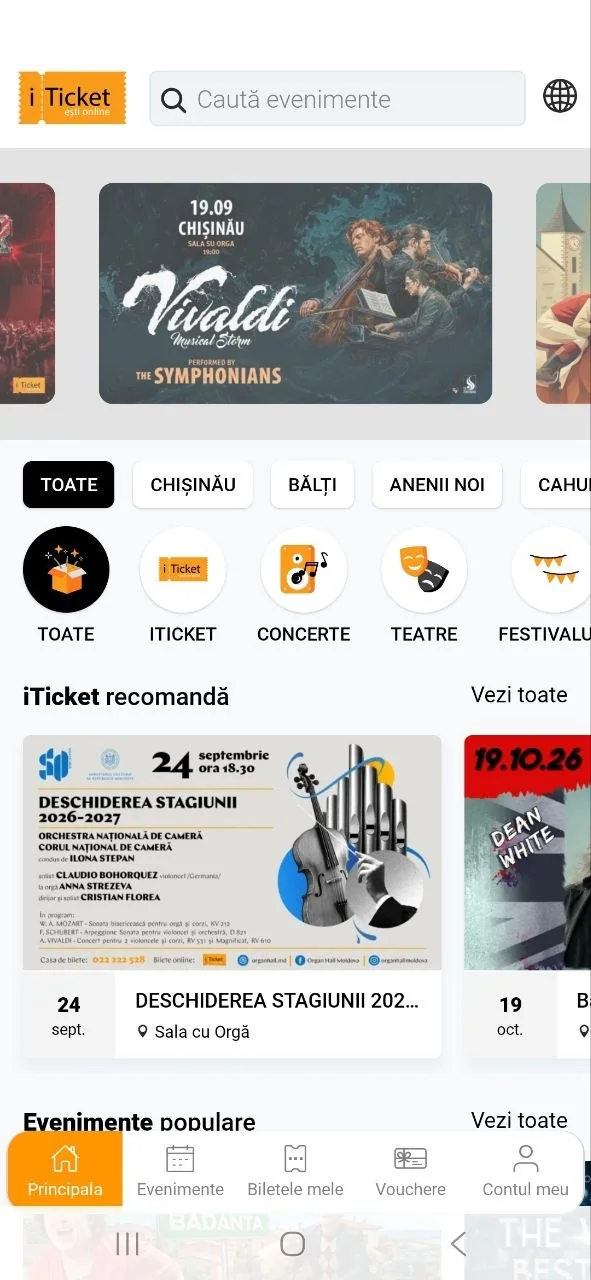
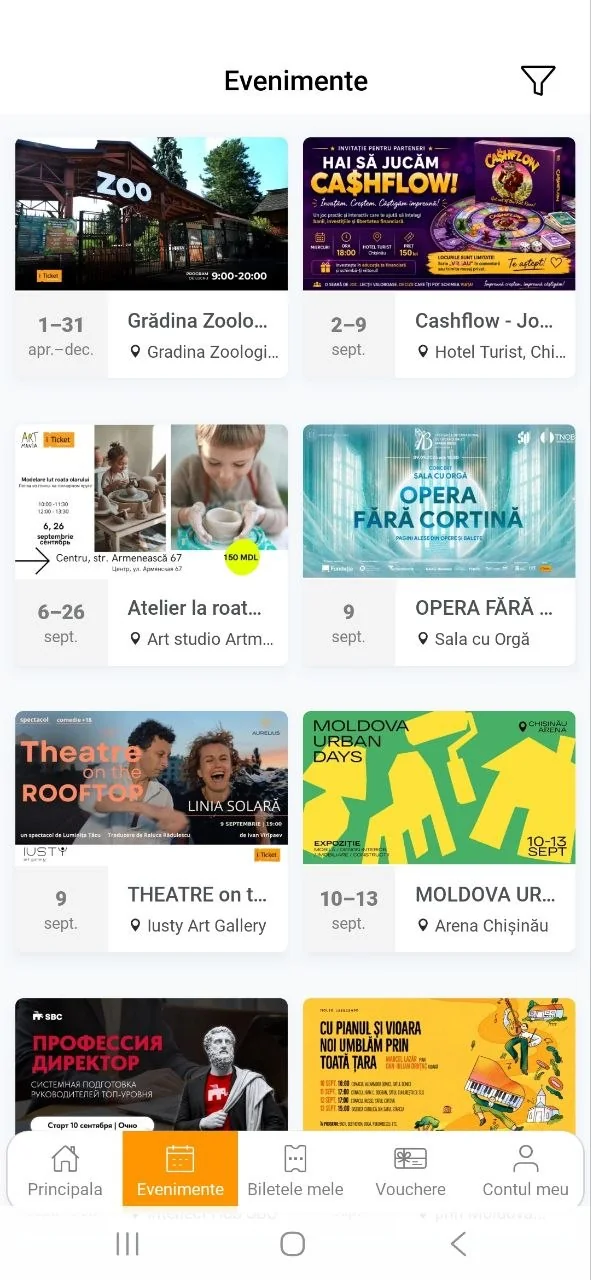
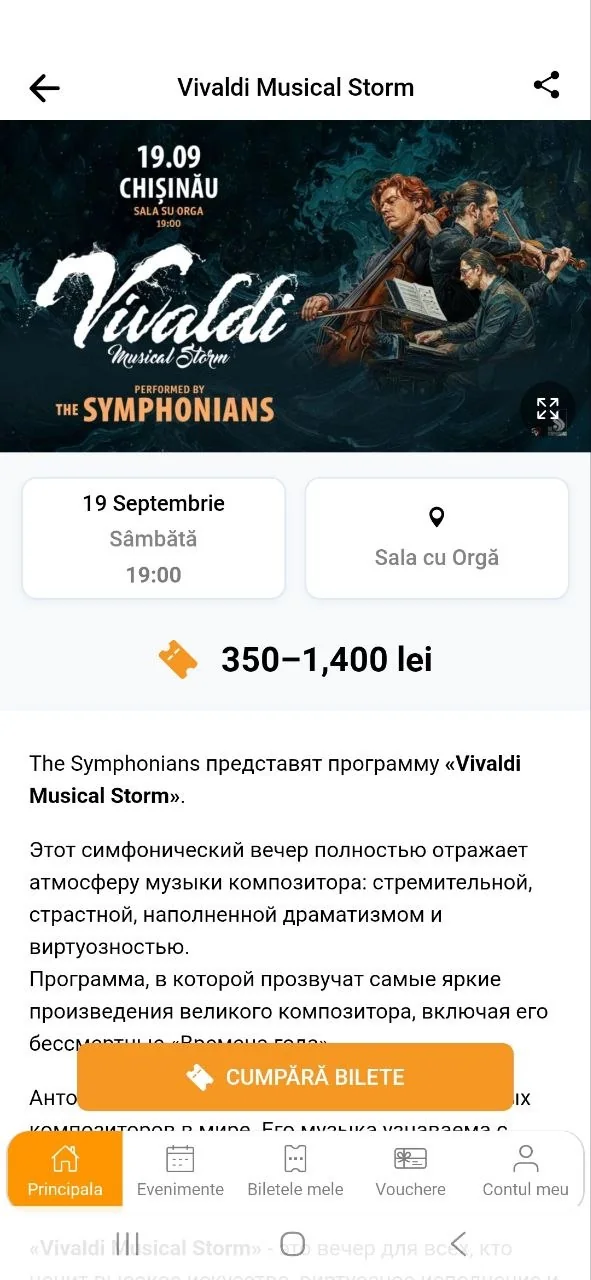
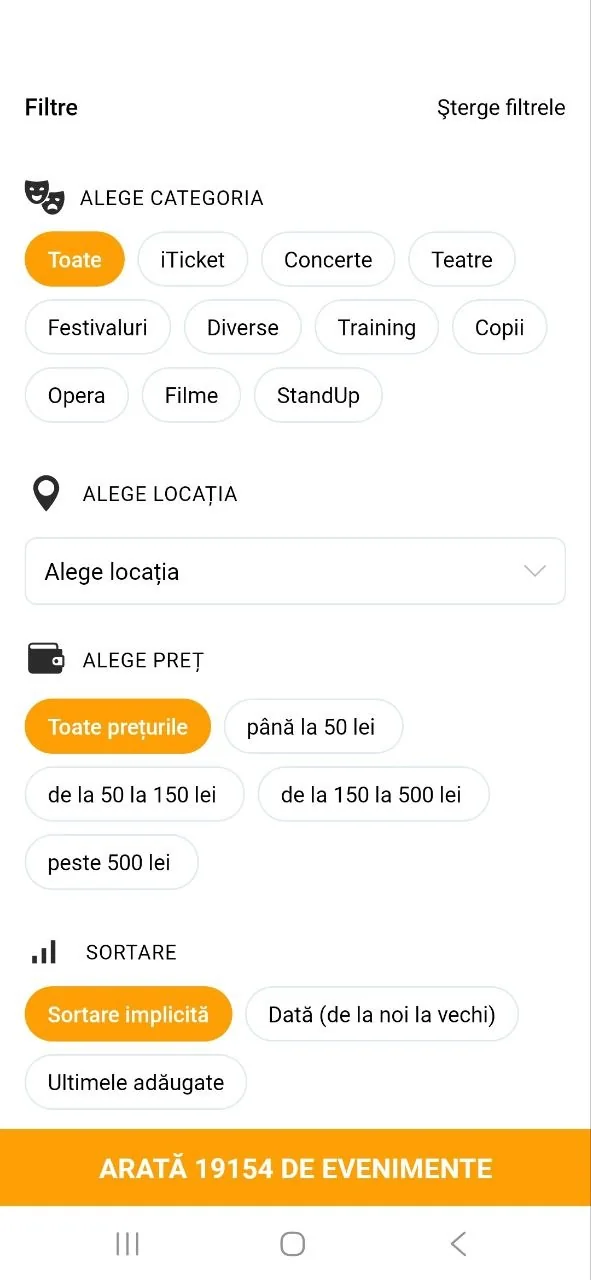
Search, promoted events, category chips, filters by city, tabs for tickets, vouchers and the account. Payment by card, by QR straight from the banking app, from the account balance, by invoice or on delivery — with a transaction history and its own error handling for each method. Push notifications.
scanning app
Ticket control at the entrance for venue staff: QR scanning and real-time statistics for the event.
API and integrations
Integrations with external partners, booking widgets for third-party sites, email and SMS campaigns with template preview, a referral programme with payouts, cashback campaigns and A/B tests. Entry through turnstiles belongs here too: the turnstile stands at the venue and speaks its own protocol.