remote·three sole proprietors·together since 2012

A website written
from scratchWebsite and landing page development

We work remotely, for clients in any country. By default — a theme from scratch to fit your design; if you need it faster and within budget, we will build on a purchased theme or a ready store platform, telling you honestly what that costs you. And it is not “delivered and forgotten”: a project stays with us for as long as it needs to — some we have been running for many years.

02 — what you are buying

A site with an admin panel, or without one

A purchased theme drags along things your site does not have: somebody else’s blocks, somebody else’s scripts, somebody else’s settings. While the page stays simple that goes unnoticed — until the first change the template was not built to allow. This is not a prohibition but a price: we do work on such a theme, but we say in advance where it will run out of road.

Websites and landing pages here are led by Emilian: twelve years on the front end, custom WordPress themes from scratch. Dumitru joins when needed.

without an admin panel

A site you do not have to run

The pages are handed to you finished. No CMS means no engine updates, no plugins that break by themselves, and nothing to hack. Cheaper and faster because of what it does not have, not because of how it is made. A landing page — from a day to a few; a multi-page site — up to two weeks.

with an admin panel

A site you run yourself

WordPress with a theme written from scratch. Needed when text, products or news change regularly and by your hands. More expensive by exactly what it costs to build an admin panel and then maintain it. From one week to four.

Everything listed further down the page is included in both levels. The difference is exactly one: who changes the content and how often. Choosing between them on price is the most expensive way to get it wrong, so we do not ask “what is the budget” but “how often are you going to change this”.

what we build on

Our own theme is what we propose by default. But you decide, and we work with any of the three, saying in advance what each one costs you.

our own theme

WordPress with a theme written from scratch

The markup and the logic are written to fit your design: there is nothing on the page you did not order. More expensive at the start and cheaper to maintain — anything can be changed without fighting somebody else’s settings.

a purchased theme

WordPress on a ready-made theme

When it has to be fast and within budget. We configure it for you, extend it, and clear out what comes bundled and is not needed. One caveat: a change the theme did not anticipate costs more here than on our own theme — and we say so before the invoice, not after.

a store platform

WooCommerce, PrestaShop or OpenCart

Catalogue, cart, payment and delivery on an engine you are used to or already run. We write our own theme or take a ready one — the same as on an ordinary site. More about stores on the neighbouring page.

03 — method

Website development from your design — or together with the design

If there is a finished design, we build it pixel for pixel, from Figma or PSD. If there is no design, we make it along with the build, in one pass.

if there is no design yet

Design and build do not have to be split into two stages: the page is assembled straight away with what it will then run on. That is fewer hours, not different quality — and the saving is yours: the invoice counts hours worked, and an hour that was not needed never appears on it.

what it is assembled with

We do not pretend that every line is written by hand: a draft page today is assembled by tools, and that is exactly the part of the work that has become cheaper.

What of the assembled work is right, what to throw away and what to rewrite is decided by three people, each with twelve to nineteen years behind them. A tool does not know that your heading is unreadable on a phone, that this markup will break your search results in six months, and that right here a third-party script will eat those very 90 points of speed. The distance between “generated” and “works” is exactly what you pay for, and we are the ones answering for it.
04 — scope of work

What the work on a website includes

Build from your design. Figma or PSD in, working pages out. Spacing, sizes and button states are taken from the design rather than eyeballed.

Responsive build. One build for every screen size: phone, tablet, laptop and large monitor — the same code and the same content. Not a separate mobile site that later drifts from the main one.

Speed. Compressed images, deferred loading, nothing surplus in the fonts and scripts.

SEO and search engines. Markup, speed and page structure — on a brochure site these are part of the build. We set up Search Console and Bing Webmaster at launch and submit the sitemap ourselves.

A second language, if you need one. Bilingual sites are ordinary work for us, not a separate project.

The code is yours. Repository and access from the very start, not on completion. Domain and hosting are registered in your name.

Connecting external services. Forms, analytics, chat, booking, pay-by-link, mailing, CRM. On a site without an admin panel this usually replaces it: the content lives in a service you already use.

None of this is sold as a separate service: not “speed optimisation”, not “a mobile version”, not “SEO support” after delivery. They are parts of one body of work, and the time for them sits in the same hours rather than arriving later as a separate invoice.

On a new site the phone version is part of the work from the start; it is the baseline. If you already have a site and it is awkward to use on a phone, there is a separate service for that: making an existing site mobile-friendly.

05 — evidence

Examples of websites and landing pages we have built

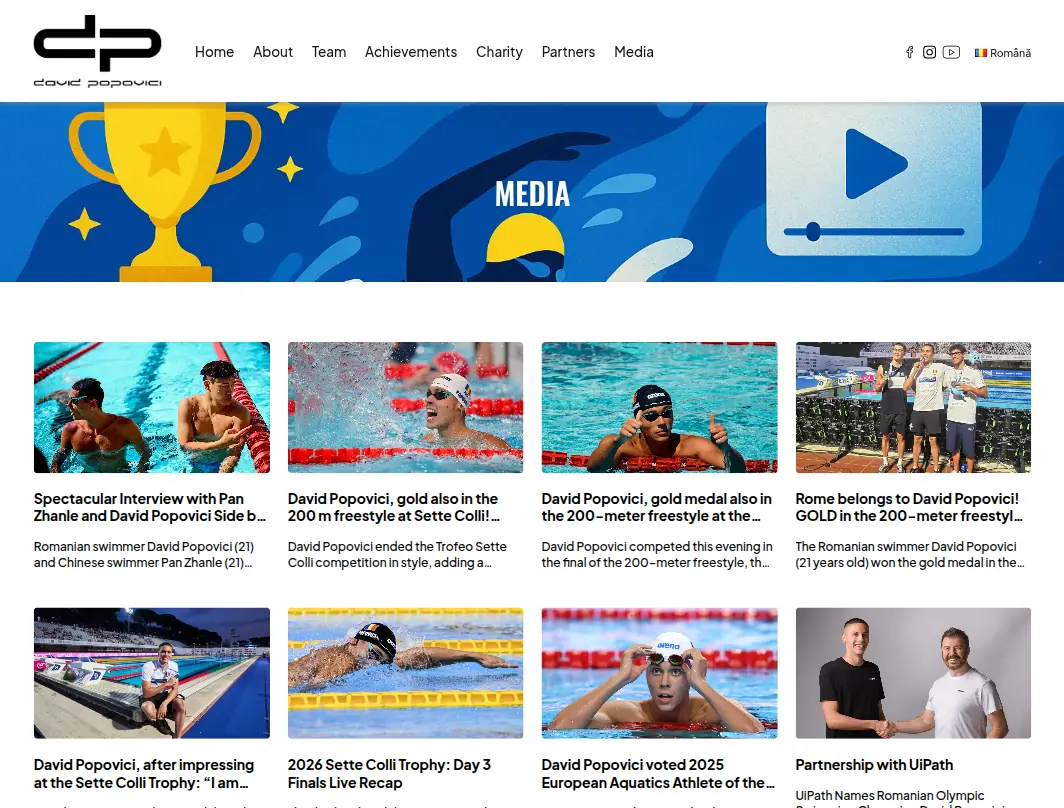
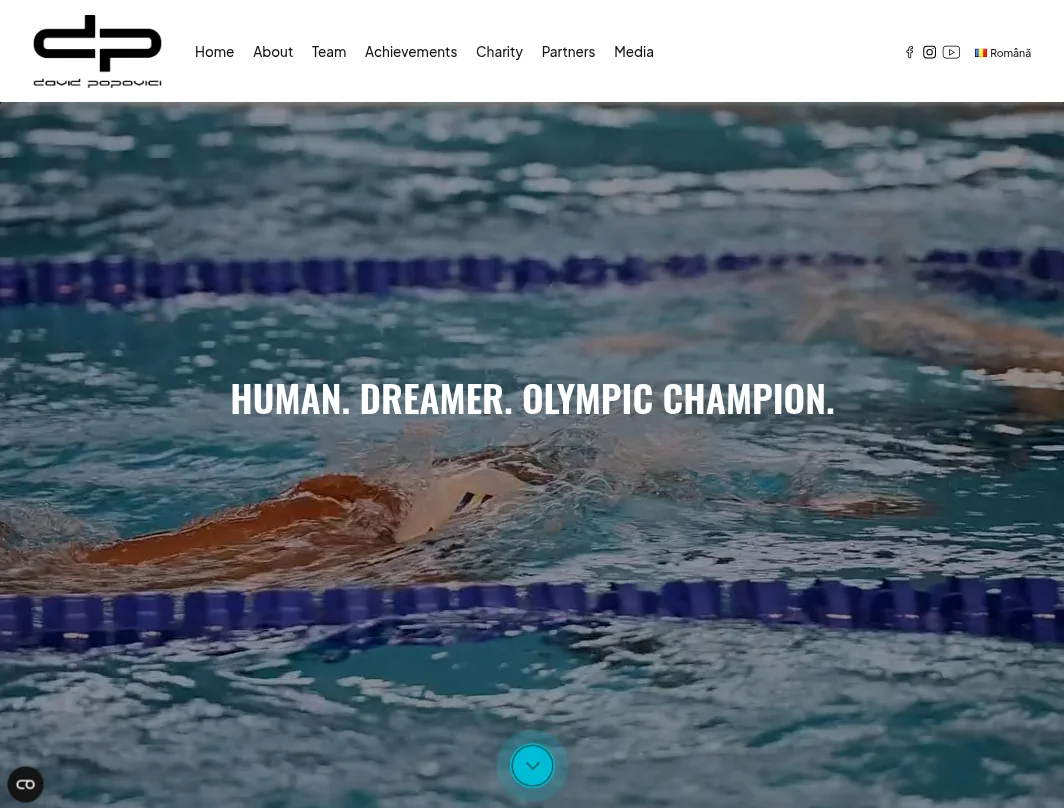
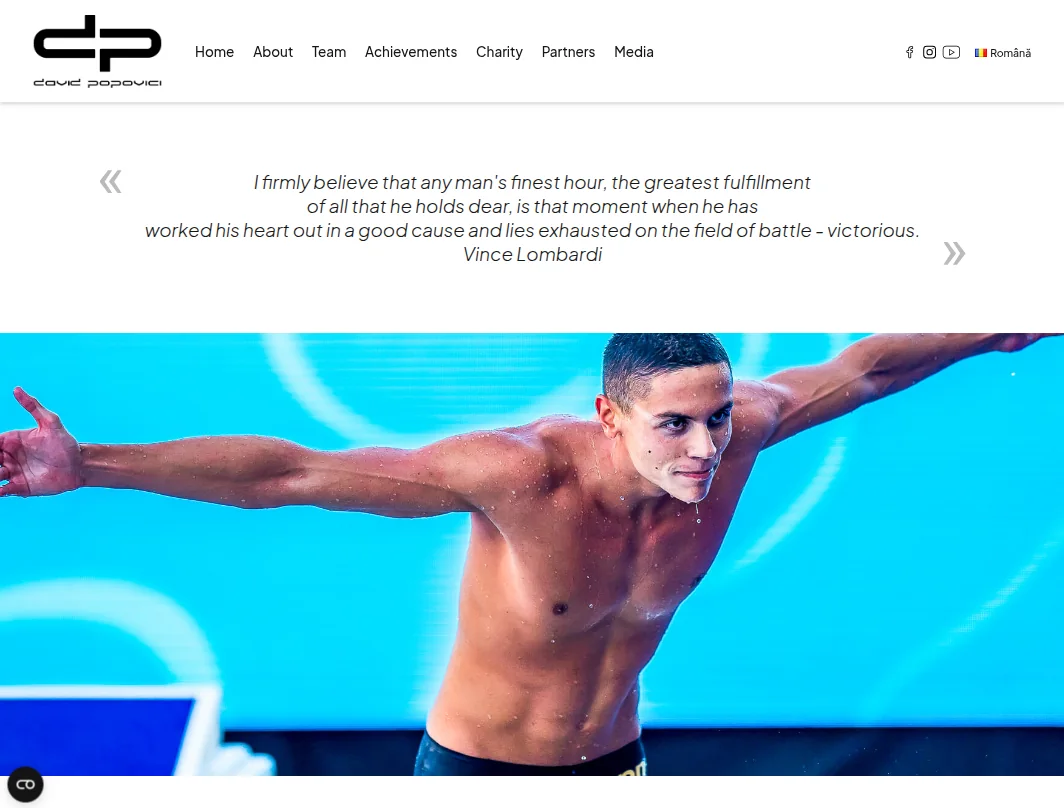
davidpopovici.com — site of an Olympic champion, built from scratch on WordPress davidpopovici.com — the quotes block and a full-width photo davidpopovici.com — the “Media” section with a selection of press coverage

davidpopovici.com

Website of Olympic swimming champion David Popovici — bilingual RO/EN, full-screen video on the first screen, achievements, charity, partners, press. Ongoing support.

custom WordPress theme from scratch
bilingual RO/EN · maintained after launch
built as part of the Blue Twin Bit team
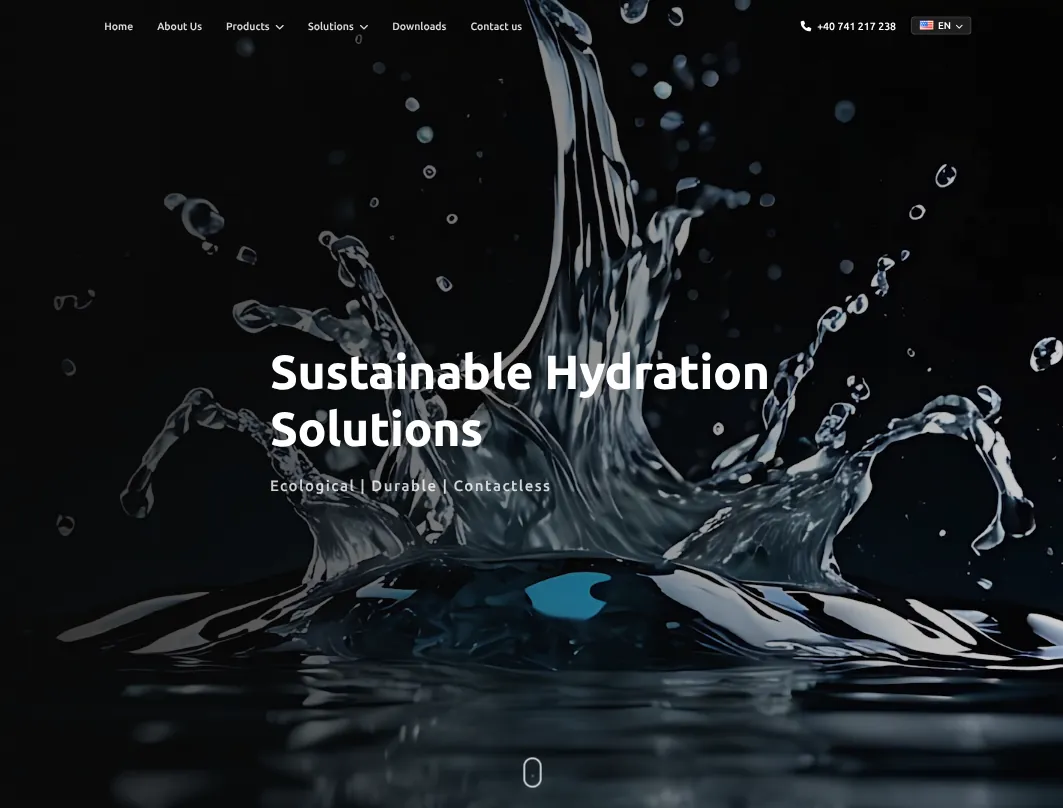
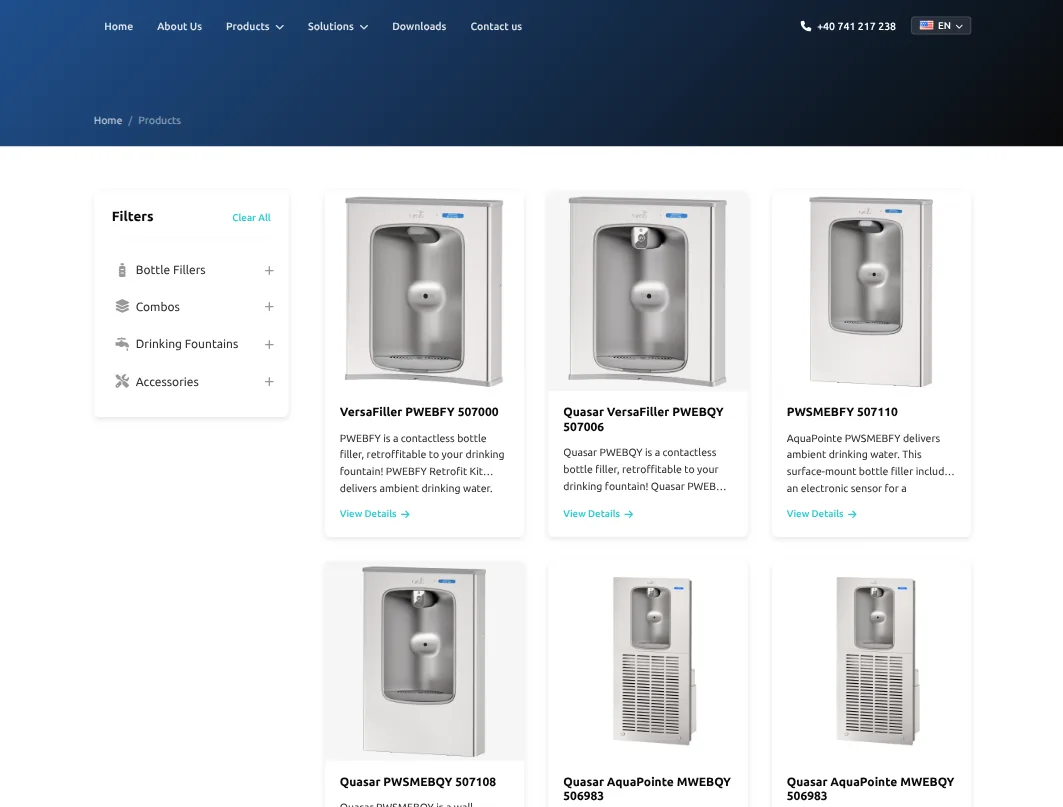
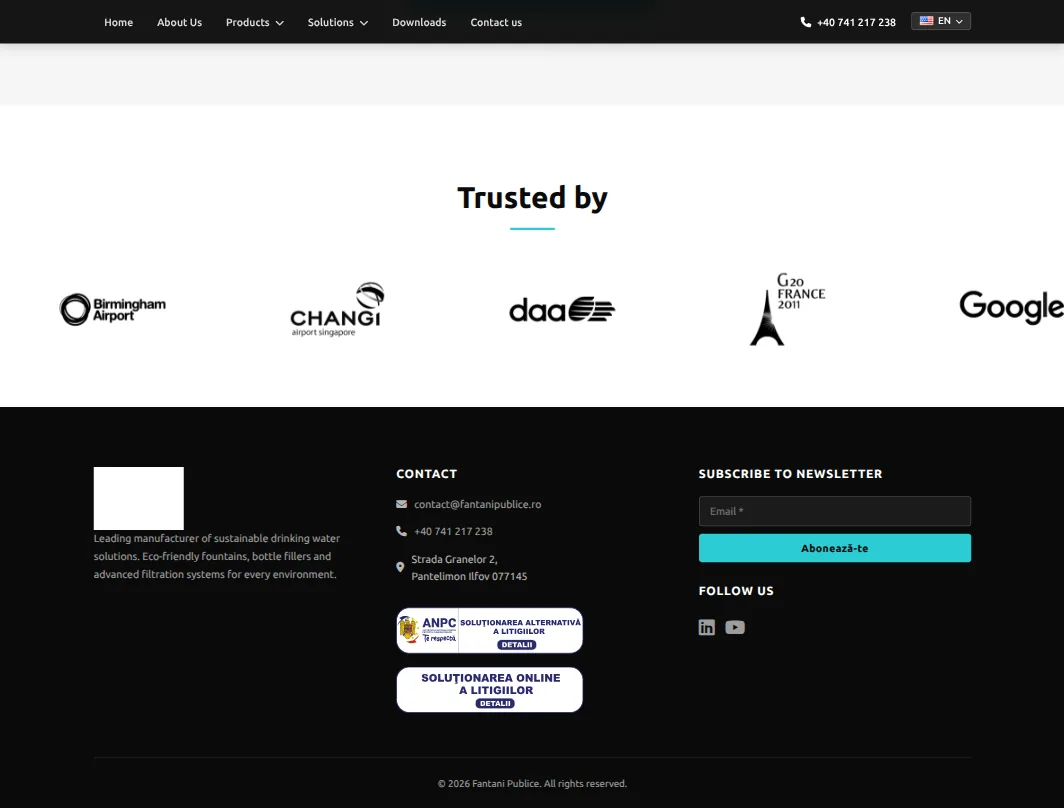
fantanipublice.ro — B2B site for the Romanian market, design and development from scratch fantanipublice.ro — the equipment catalogue with filters by type fantanipublice.ro — the “Trusted by” block with client logos, and the site footer

fantanipublice.ro

B2B site for contactless public drinking fountains for the Romanian market — products, solutions, documentation. Design and development from scratch, ongoing support.

design and custom WordPress theme from scratch
Romanian market · maintained after launch
built as part of the Blue Twin Bit team

This is part of what we can show: a significant share of our work is covered by agency NDAs. Online stores are on the neighbouring page. Examples on request.

06 — process

How a website is built: from spec to launch

  1. 01You come with a technical spec.What kind of site, who it is for and what has to be on it. That part is yours: without it there is nothing to count.
  2. 02We analyse it.We turn it into a document that leaves no questions and no double readings: what exactly we are building, and what we are not. For a site that means: how many pages, what is on each of them and where the text comes from.
  3. 03An estimate in hours — from the finished spec.The numbers are counted from a document you have read and approved. Counting hours from a description of an idea is guesswork you pay for. Each unique page is counted, not “a website” as a single number.
  4. 04You see something working early.Not a screenshot and not a status report but a page you can open on your own device — phone, tablet or computer. Changing your mind at this stage is cheap.
  5. 05You see where the time goes.Tracked in Toggl, the report open to you: once a month — hours by task, what is done, what comes next. You are billed for hours worked, not in advance.
  6. 06Launch — then support or handover.The site can stay with us on monthly support, or move to you or your team. The repository and the access are yours either way.
07 — plainly

What we do not do on websites

We do not assemble in a page builder and we do not pass a purchased theme off as development from scratch. Working on a ready theme is fine, and we do it; calling it ours is not. The quote says exactly what was bought and what was written by us.

We do not sell a site without an admin panel to someone who needs a blog. If the content changes every week and by your hands — take the level with an admin panel, even if the first invoice is larger. Saving there turns into an invoice for every change.

We do not quote a price before the spec. A figure based on a description of an idea is not an estimate — it is a number that will change anyway. We would rather change it before you have counted on it.

Buffer time goes into the estimate but not into the invoice: you pay for hours worked. If the work takes less, you pay less. More on how hours are counted — on the home page.

08 — common questions

Common questions about website development

How much does a website cost?

The price is counted in hours, and we state the number of hours in advance, based on the technical spec. Without that document we give no figure: a sum guessed from a description of an idea would be just that, a guess.

How long does building a website take?

A landing page — from a day to a few; a multi-page site without an admin panel — up to two weeks; with one — from one week to four. That is a range from experience; the exact schedule comes with the estimate in hours, from the finished spec.

What does “a site without an admin panel” mean?

That there is no CMS underneath — neither WordPress nor any other: the pages are handed to you finished and run by themselves. Hence the price, the build speed and the loading speed. Design, responsiveness, SEO and a second language are exactly the same as on a site with an admin panel; the only difference is who changes the text.

How will I change the text if there is no admin panel?

Through us, by the hour and on the timer — like any other work. Changing a phone number, a price or a paragraph takes minutes, and it appears on the invoice as minutes. That is cheaper while there are a few changes a year; if there are a few a month, the honest answer is different — you need the level with an admin panel. Separately: everything that changes often by itself — appointments, schedules, reviews — usually lives in an external service, and the site simply displays it.

Can an admin panel be added later?

It can, and it is separate work with its own estimate — not a rebuild from scratch, but not a switch either. The design and the build move across; what was not there before gets added. If you already know now that in six months you will want to edit things yourself, it is cheaper to take the second level straight away.

Do you use AI?

Yes, and we do not hide it. A draft page is assembled by tools, and that shows on the invoice in your favour: we work by the hour, and this part takes fewer hours. Everything that happens after the draft is human work, and it is us you hold responsible for a working site, not the tool.

How does a landing page differ from a website?

By volume of work, not by genre. A landing page is one page for one action: read it and write to you. A brochure site is the same volume but without that single action: a few screens about who you are and how to reach you. A corporate site already has several sections, navigation between them and, as a rule, an admin panel so you can change the text yourself. All of it is built the same way — from scratch, to your design.

What do you build websites on?

Most often WordPress with a custom theme written from scratch — and plain markup without a CMS when the project does not need an admin panel. The full list of what we work with is at the bottom of the page. If your project rests on a technology that is not on that list, it is more honest to say straight away that we are not the right people.

Can a bilingual site be made without an admin panel?

Yes. An honest caveat: without a CMS a second language is a second set of pages, not a switch. It is as much work as the first, and changes have to be kept in sync by hand. On a site where the text changes once a year that is fine; on a site where it changes constantly it is a reason to take the level with an admin panel.

Who owns the code, the domain and the hosting?

The code is yours. We work month to month and invoice for work already done, so repository access can be handed over at the start rather than at the end of the project — there is no reason for us to hold the code until the final payment. The domain and the hosting are also better registered in your name: we can set them up and migrate them, but the invoices and the owner rights should stay with you, otherwise changing contractor will one day run into somebody else’s account.

Will you sign an NDA?

Yes. A significant part of our current work is already under one.

What time zone and languages do you work in?

We work remotely with clients anywhere, time zone EET. We speak and write Romanian, Russian, English and Bulgarian.

09 — next

Tell us what needs building

Come with a technical spec. We will rework it until no questions remain, and count the hours from that.

one address, all three of us

[email protected]

This is the way in. Websites and landing pages are answered by Emilian — or by whichever of us fits the task.

To write to one of us directly — contacts on the home page.

If the task is a different one: a web app or internal system, APIs, integrations and payments, an iOS and Android app, an online store, taking over an existing project, making an existing site mobile-friendly.

Want to see who we are first — the home page: the three of us, what each one does, how we count hours and what we have already built.